1982-09-30-Detroit_Free_Press_1
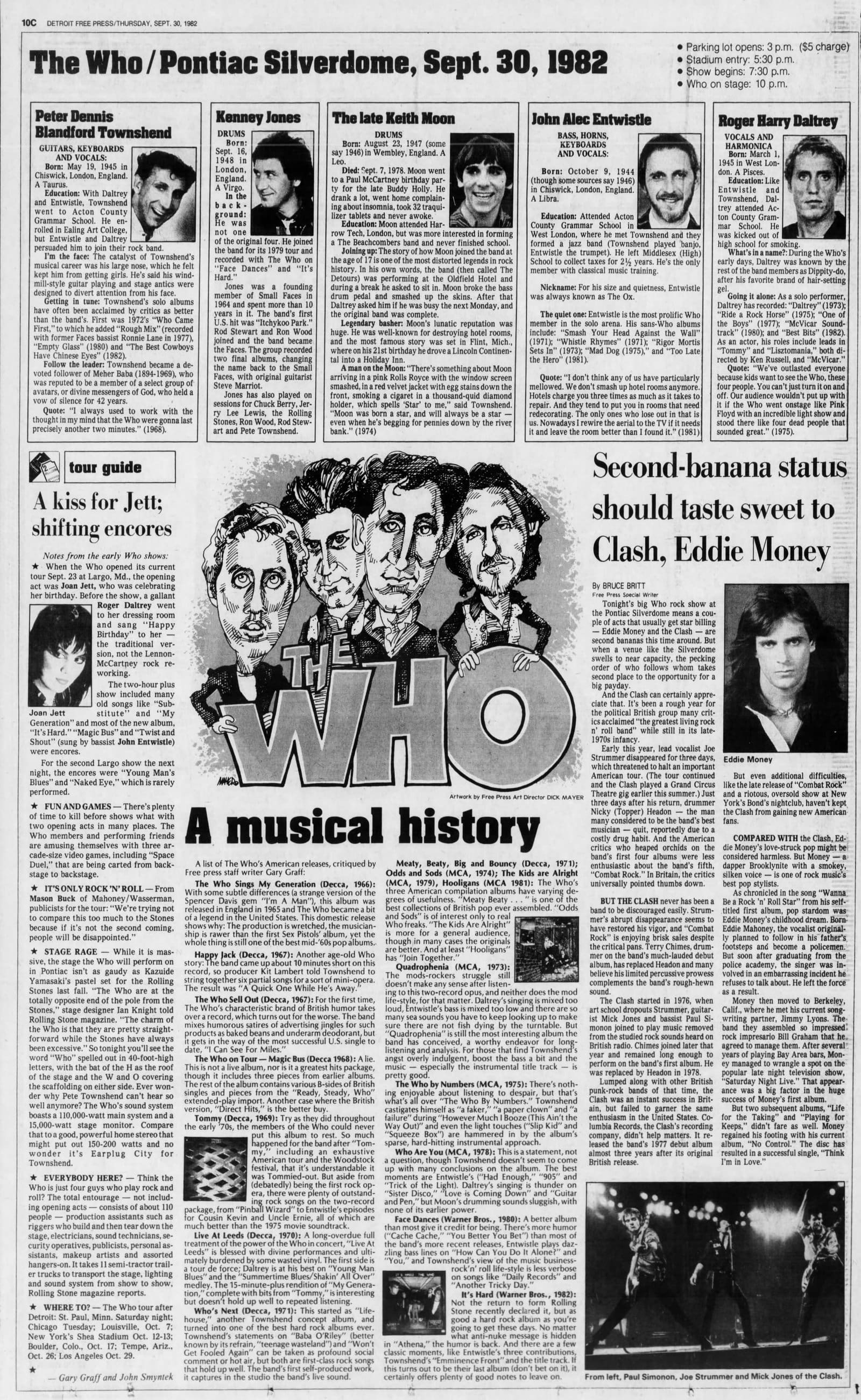
Tonight’s big Who rock show at the Pontiac Silverdome means a couple of acts that usually get star billing — Eddie Money and the Clash — are second bananas this time around. But when a venue like the Silverdome sells to near capacity, the pecking order of who follows whom takes second place to the opportunity for a big payday.
And the Clash can certainly appreciate that. It’s been a rough year for the political British group many critics acclaimed “the greatest living rock n’ roll band” while still in its late-1970s infancy.
Early this year, lead vocalist Joe Strummer disappeared for three days, which threatened to halt an important American tour. (The tour continued and the Clash played a Grand Circus Theater gig earlier this summer.) Just three days after his return, drummer Nicky (Topper) Headon — the man many considered to be the band’s best musician — quit, reportedly due to a costly drug habit. And the American critics who heaped orchids on the band’s first four albums were less enthusiastic about the band’s fifth, “Combat Rock.” In Britain, the critics universally pointed thumbs down.
BUT THE CLASH never has been a band to be discouraged easily. Strummer’s abrupt disappearance seems to have restored his vigor, and “Combat Rock” is enjoying brisk sales despite the critical pans. Terry Chimes, drummer on the band’s much-lauded debut album, has replaced Headon and many believe his limited percussive prowess complements the band’s rough-hewn sound.
The Clash started in 1976, when art school dropouts Strummer, guitarist Mick Jones and bassist Paul Simonon joined to play music removed from the studied rock sounds heard on British radio. Chimes joined later that year and remained long enough to perform on the band’s first album. He was replaced by Headon in 1978.
Lumped along with other British punk-rock bands that time, the Clash was an honest success in Britain, but failed to garner the same enthusiasm in the United States. Colombia Records, the Clash’s recording company, didn’t help matters. It released the band’s 1977 debut album almost three years after its original British release.
COMPARED WITH the Clash, Eddie Money’s love-struck pop might be considered harmless. But Money — a dapper Brooklynite with a smokey, silken voice